
When people think about physical therapy, they usually think about getting stronger or stretching tight muscles. And sometimes that’s true. But a lot of the time, especially with ongoing pain or recurring injuries, strength isn’t actually the main issue. The real problem is motor control.
What is motor control?
Motor control is your body’s ability to activate the right muscles, at the right time, in the right sequence, and with the right amount of force for whatever you’re doing. It’s not just can you move, it’s how you move!
Your nervous system is constantly coordinating information from your muscles, joints, vision, and balance systems to create smooth, efficient movement. When everything is working well, movement feels automatic and stable. When it’s not, you might notice ongoing pain, a sense of instability, recurring injuries, tightness that stretching doesn’t fix, or muscles that feel overworked and fatigued.
Let’s talk about the core, because it’s more than abs!
When most people hear “core,” they think of sit-ups or six pack muscles. But your core is really a pressure and stability system made up of the diaphragm, pelvic floor, deep abdominals like the transversus abdominis, and small spinal stabilizers like the multifidus.
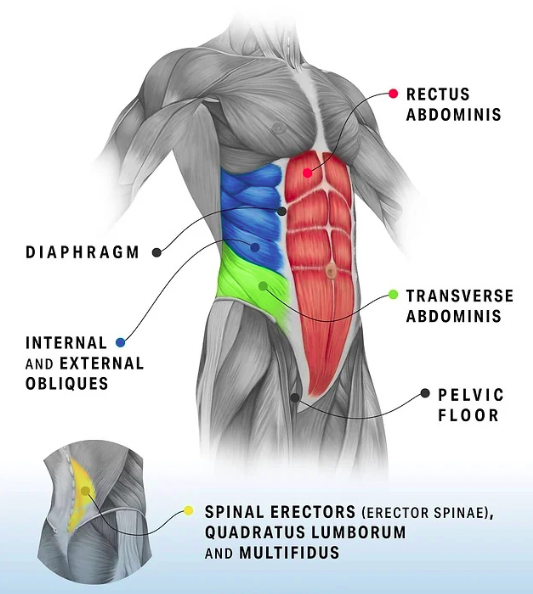
These muscle groups work together to create stability before you even move your arms or legs. In a well coordinated system, your diaphragm manages pressure through your breath, your pelvic floor responds reflexively, your deep abdominals activate subtly, and your spine is supported automatically. This all happens in milliseconds, before you are even aware of it. This anticipatory control is what protects your body.
When motor control is off, whether from pain, pregnancy, surgery, injury, or stress, that timing changes. Instead of the deep stabilizers doing their job first, larger surface muscles take over. The spine loses some of its support, pressure is not managed as well, and movement becomes more guarded or compensatory. You can have strong abs and still lack good core motor control, which is why doing more crunches does not fix back pain.
Why strength alone does not solve the problem
A muscle can test strong on its own but still not work well during real movement. For example, a postpartum athlete might have good abdominal strength but poor pressure coordination. Someone with low back pain may brace excessively instead of using their deep stabilizers. A runner with knee pain might have strong quads but poor hip control when landing. A patient with neck pain may overuse superficial muscles instead of deeper stabilizers.
Strength measures force. Motor control reflects coordination, timing, and efficiency. They are not the same thing.
What disrupts motor control?
Many factors can affect motor control, including pain, pregnancy and postpartum changes, surgery, neurological injury, chronic inflammation, stress, fatigue, and repetitive movement patterns.
Pain, in particular, can change how the brain coordinates movement. The body adapts to protect itself, but those patterns can persist even after the tissue has healed. Compensatory strategies develop and linger. When one area underperforms, another area has to take on more work.
A simple way to think about it is like a factory line. If one worker slows down, another has to pick up the slack. Over time, the overworked worker is the one most likely to break down.
What motor control training looks like in physical therapy
This type of training can look subtle, but it is often more challenging than it seems. Instead of focusing on lifting heavier, we focus on breathing and pressure coordination, restoring the relationship between the diaphragm and pelvic floor, and improving low load precision with controlled activation of deep stabilizers.
We also emphasize endurance before power, since these muscles need to work at a low level over time, not just produce maximum force. Quality matters more than quantity, so it is usually fewer reps with more attention to alignment and timing. It is about building from the foundation up.
Eventually, this control is integrated into real life movement like lifting, running, reaching, carrying kids, and returning to sport or fitness.
We are not just strengthening muscles, we are retraining the nervous system.
Why this matters long term
When motor control improves, joint stress tends to decrease, pain often improves, and movement feels smoother and more natural. It also helps reduce the risk of injuries returning and can improve overall performance. It is the difference between temporarily managing symptoms and truly building resilience.
Bottom line
If you have been told to just strengthen it, tried core workouts without lasting relief, felt unstable despite being active, or dealt with recurring pain in the same area, it might not be a strength problem. It may be a motor control issue, and that is exactly where skilled physical therapy can make a meaningful difference.